Inspiration
A Guide to Vegetable Container Gardening
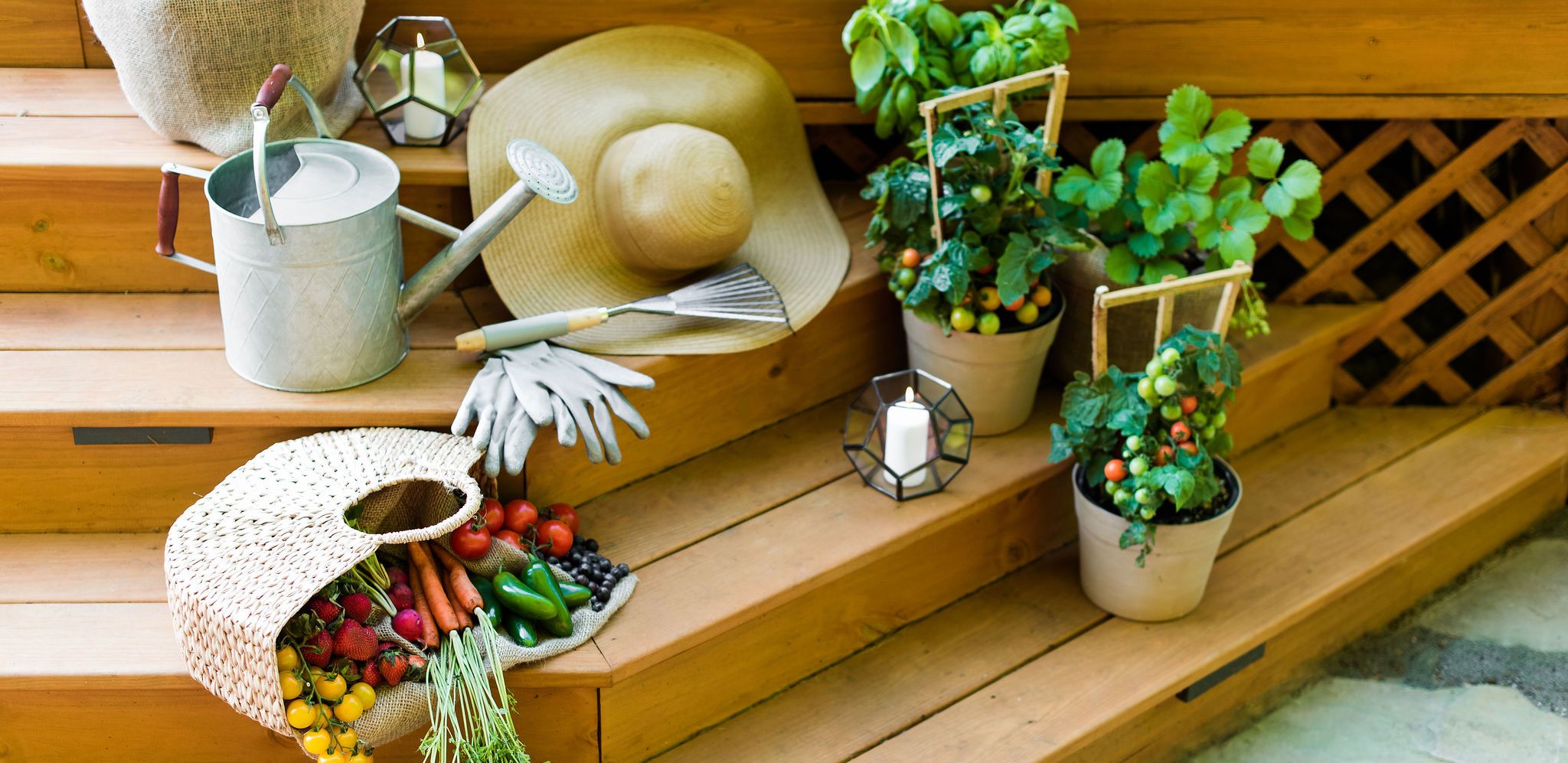
Story Highlights
Growing your own food can bring you both joy and bounty. There's a simple pleasure in biting into a tomato still warm from the sun—picked and eaten on the spot.
If your vegetable gardening is limited by insufficient space or an unsuitable area, consider raising fresh, nutritious, homegrown vegetables in containers. A patio, deck, balcony, and even a window sill can provide sufficient space for a productive container vegetable garden.
Additionally, for busy or novice gardeners, container vegetable gardening is easier and lower in maintenance than traditional vegetable gardening. Problems with poor soil conditions, soilborne diseases, and pest management are much easier to overcome when using containers. Additionally, container vegetable gardening is a great way to introduce children to the joys and rewards of growing your own food.
In this article, we provide a step-by-step guide to growing a successful vegetable container garden.

Step 1
Choosing the Right Vegetables
Almost any vegetable that will grow in a typical backyard garden will also do well as a container-grown plant. Vegetables with vining growth habit, like pole beans, cucumbers, and many squashes, will likely require trellises and a little more room to grow. If you're truly constrained on space, variety selection is extremely important. Most vegetables offer varieties in various sizes, so be mindful when making selections.

-
Tomatoes
-
Peppers
-
Herbs
-
Eggplant
-
Potatoes
-
Radishes
-
Carrots
-
Lettuce & Greens
-
Peas
-
Cucumbers
-
Green Beans
-
Squash
-
Turnips
-
Broccoli

Step 2
Selecting the Right Container
You can use almost anything for a garden planter as long as it's big enough, has good drainage, and is made of food-safe material. That said, when growing vegetables, bigger really is better. The more soil a container can hold, the more moisture it will retain, and the less you will have to water. In general, don’t bother with containers that are smaller than 12 inches across, unless using for herbs.
Below is a list of recommended container sizes for various vegetables:

-
Tomato: 5 gallons, 1 plant
-
Pepper: 5 gallons, 1-2 plants
-
Herbs: 1 gallon, 1-3 plants
-
Eggplant: 5 gallons, 1 plant
-
Potatoes: 5 gallons, 2 plants
-
Radishes:: 1 gallon, 3 plants
-
Carrots: 1 gallon, 2-3 plants. Use pots 2 inches deeper than carrot length
-
Lettuce & Greens: 1 gallon, 2 plants
-
Peas: 3-5 gallon, 3-5 plants
-
Cucumbers: 1 gallon, 1 plant
-
Green Beans: 2 gallons, space plants 3" apart
-
Squash: 5 gallons, 1 plant
-
Turnips: 2 gallons, 2 plants
-
Broccoli: 2 gallons, 1 plant

Step 3
Use Quality Soil
High-quality potting soil is important for vegetables. Don't use soil from your garden, because it will compact in the containers and won't drain water properly. Also, using soil from the garden runs the risk of introducing weeds and soil-borne diseases into your containers.

Step 4
Placement
One major advantage to gardening in containers is that you can place the vegetables in areas where they can receive the best possible growing conditions.
Nearly all vegetable plants will grow better in full sunlight than in shade. However, leafy crops such as lettuce, cabbage, greens, spinach, and parsley can tolerate more shade than root crops such as radishes, beets, turnips, and onions. Fruit-bearing plants, such as cucumbers, peppers, tomatoes, and eggplant need the most sun of all.
Step 5
Inspect Daily for Proper Care
A watched pot never boils. Watched vegetables, on the other hand, do far better than those that are unwatched and neglected. Though you don't always have to do anything, it is good practice to give your vegetables a quick inspection once a day.

Correct Watering
Many vegetable plants, such as tomatoes, need lots of water. However, you don't want to drown your plants. The goal is to keep the soil evenly moist but not soaking wet.
To figure out whether your plants need water, stick your finger down into the soil about an inch. If the soil feels dry, add water; if you're not sure, wait and check later in the day. At the height of summer, you'll probably need to water at least once or sometimes twice a day. This is often the most high-maintenance and critical aspect of vegetable container gardening.

Fertilization
Plants need nutrition to thrive, and their food is fertilizer. If your soil doesn’t have fertilizer already mixed in, add some several times throughout the growing season, according to the directions on the label. Many gardeners mix organic, granular fertilizer into the containers before planting. Then, every couple of weeks, add diluted liquid fish emulsion or liquid seaweed to give the plants the nutrition they need.

Step 6
Harvesting
Make sure to harvest your vegetables at the peak of maturity when their full flavor has developed. Vine-ripened tomatoes, tender green beans, and crisp lettuce will have the best flavor. Just like in the supermarket, vegetables have an expiration date and there is nothing more upsetting than seeing your hard work rotting on the vine.

Be sure to
Share the fruits of your labor!
If you can't keep up with your own success, don't be afraid to share and show off your hard work. Consider putting together a basket of your extras to share with family, friends, and neighbors. Or, if you like to entertain, consider organizing a vegetable-themed dinner party that highlights the fruits of your labor.

Keep things fresh & Different
Explore New Cooking Methods
If you have an abundance of produce, it will be important to try new cooking methods. An exploration into new ways of cooking vegetables will keep you interested and add another layer of enjoyment to your gardening. One of our favorite ways to cook vegetables is on the grill.

Step 7
Remove Soil
At the end of the harvest season, discard the plant and soil from the pot. Do not reuse the same soil for a second season of production. If infected, the soil or mix will spread disease into the second season unless it is properly composted. Properly composted planting media can be reused.